Descendants of Spaniards: Concepts, Citizenship, Residence and Other Aspects
We share a brief explanation of the Democratic Memory Law, and the residence and citizenship options for descendants of Spaniards.

4 mins
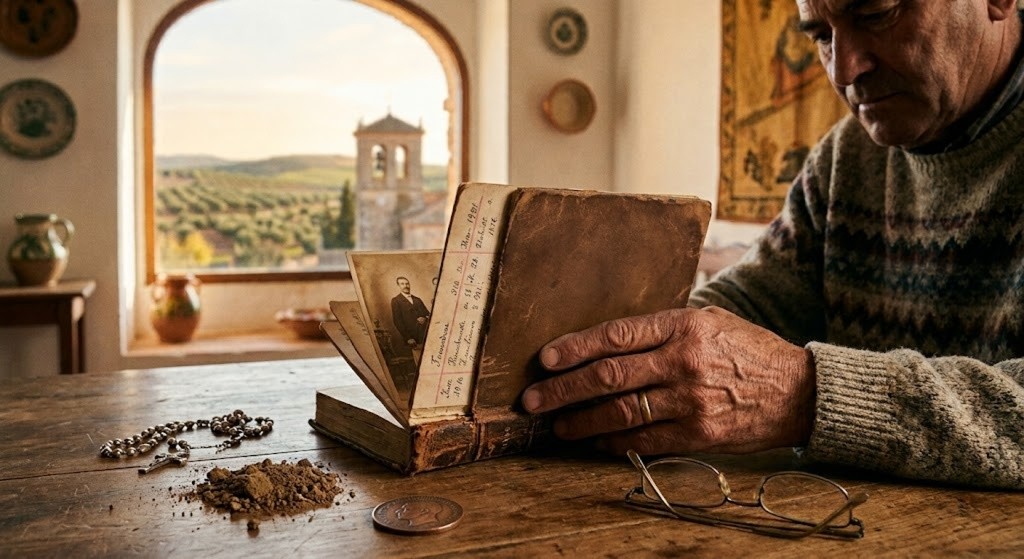
Today we are going to look into the Democratic Memory Law, whose application deadlines have already closed, as well as the alternatives currently in force for descendants of Spaniards who wish to reside in Spain or acquire Spanish citizenship.
Finally, we will discuss the difference between two indeterminate legal concepts: "originally Spanish" and "Spanish of origin", which began to become a bit clearer following the publication of the Instruction of 25 October 2022 on the development of the democratic memory law, which has now been repealed.
🕊️ Democratic Memory Law
Law 20/2022 on Democratic Memory, popularly known as the "Grandchildren's Law", entered into force in October 2022. Its Eighth Additional Provision opened a historical window: it allowed thousands of descendants of Spaniards who suffered exile, as well as the children of Spanish women who lost their citizenship upon marrying foreigners before the 1978 Constitution, to acquire Spanish citizenship.
Chronology:
October 2022: Entry into force of Law 20/2022 and publication of the Instruction of 25 October.
October 2024: End of the original two-year period for submitting applications.
October 2025: End of the extension and definitive closure for submitting new applications.
In short: this route is no longer available. However, descendants of Spaniards still have residency and citizenship options currently in force, which we explain below.
🔀 Alternative Options
🏡 Residence Authorisation
This is currently the most powerful route for descendants wishing to settle in Spain. Since the reform of the Immigration Regulations (Royal Decree 1155/2024, of 19 November, on the rights and freedoms of foreigners in Spain and their social integration), a new temporary residence authorisation for relatives of Spanish nationals has been created.
Within these regulations, the star scenario for descendants is regulated in Article 94.h: "sons and daughters whose father or mother is or had been originally Spanish (español de origen)" are entitled to this residence authorisation.
What does it mean if your father/mother "is or had been originally Spanish (español de origen)"?
This legal formula is a great wildcard covering two scenarios:
"Is": Your father or mother is alive and is currently originally Spanish (español de origen).
"Had been": Your father or mother passed away while being Spanish, or lost/renounced it during their lifetime.
👆🏽 Spanish Citizenship by Option
The Civil Code continues to maintain direct routes for certain descendants to acquire citizenship through a simple declaration of option:
Within the Civil Code, children of an originally Spanish person (originariamente español) are regulated in Article 20.1.b: "People whose father or mother had been originally Spanish (originariamente español) and, furthermore, had been born in Spain, may opt."
Note: Unlike other routes, there is no age limit to apply for this one.
What is understood by “had been originally Spanish (originariamente españoles)”?
Those who acquired citizenship automatically at the very moment of their birth, regardless of whether they kept it all their life or lost it later (for example, by emigrating to another country and renouncing it), and, in this case, the nuance is added that they must have been born in Spanish territory.
📍 Spanish Citizenship by Residence
As a general rule, the law requires 10 years of residence to apply for citizenship (or 2 years for Latin Americans). However, Article 22 of the Civil Code rewards blood ties, lowering the waiting time to the absolute minimum.
Only 1 year of legal and continuous residence in Spain is required for "persons born outside Spain to a father or mother, grandfather or grandmother, who had been originally Spanish (originariamente españoles)."
What is understood by “had been originally Spanish (originariamente españoles)”?
Those who acquired citizenship automatically at the very moment of their birth, regardless of whether they kept it all their life or lost it later (for example, by emigrating to another country and renouncing it).
In order to understand these scenarios a bit better, we will look deeper into the differences between the concepts "originally Spanish" (originariamente español) and "Spanish of origin" (español de origen).
🇪🇸 Difference Between Originally Spanish and Spanish of Origin
🧬 Originally Spanish (originariamente español)
Being "originally Spanish" means acquiring citizenship from the very moment of birth (for example, by being born to a Spanish mother or father). In this scenario, citizenship has legal effects from day one and does not require any subsequent procedure to begin to exist. As it is an innate right, it has the absolute protection of Article 11 of the Spanish Constitution, which expressly prohibits the State from depriving a person of their citizenship.
📜 Spanish of Origin (español de origen)
Being "Spanish of origin" (when obtained after birth) means acquiring this special status at a time after birth. In this case, the grant does not have retroactive effects: the person is Spanish for all purposes only from the moment it is approved and formalised before the Civil Registry. However, the law equates this status to the previous group, granting it the same protection under Article 11 of the Spanish Constitution. Therefore, the State cannot withdraw this citizenship under any circumstances either.
⭐️ Traam can help you obtain Spanish citizenship by residence, with guides and support from our legal team. Trust us to manage your citizenship procedure for an easier and faster experience, ensuring there are no mistakes in your application.